
healing that ages
3 min read - all sources to this journal are listed at the bottom.
Inflammation has a bad reputation it hasn't always earned. The acute kind — the redness, swelling, and heat around a wound — is your body's repair crew showing up. It's fast, it's loud, and it leaves once the job is done.
The problem is the other kind: low-grade, chronic inflammation that never fully goes out. No redness, no visible swelling — just a slightly-too-high level of signaling molecules like CRP and IL-6, year after year. This kind of fire doesn't burn the house down. It weakens the beams.
CRP and IL-6 explained.
They are both markers doctors use to check for inflammation in the body.
IL-6 is a signal your immune cells send out when something's inflamed. That signal travels to your liver and tells it to make CRP, which then shows up in your blood. So IL-6 is the alarm, and CRP is the smoke that shows up afterward — measuring CRP is just an easy way to tell the alarm went off.
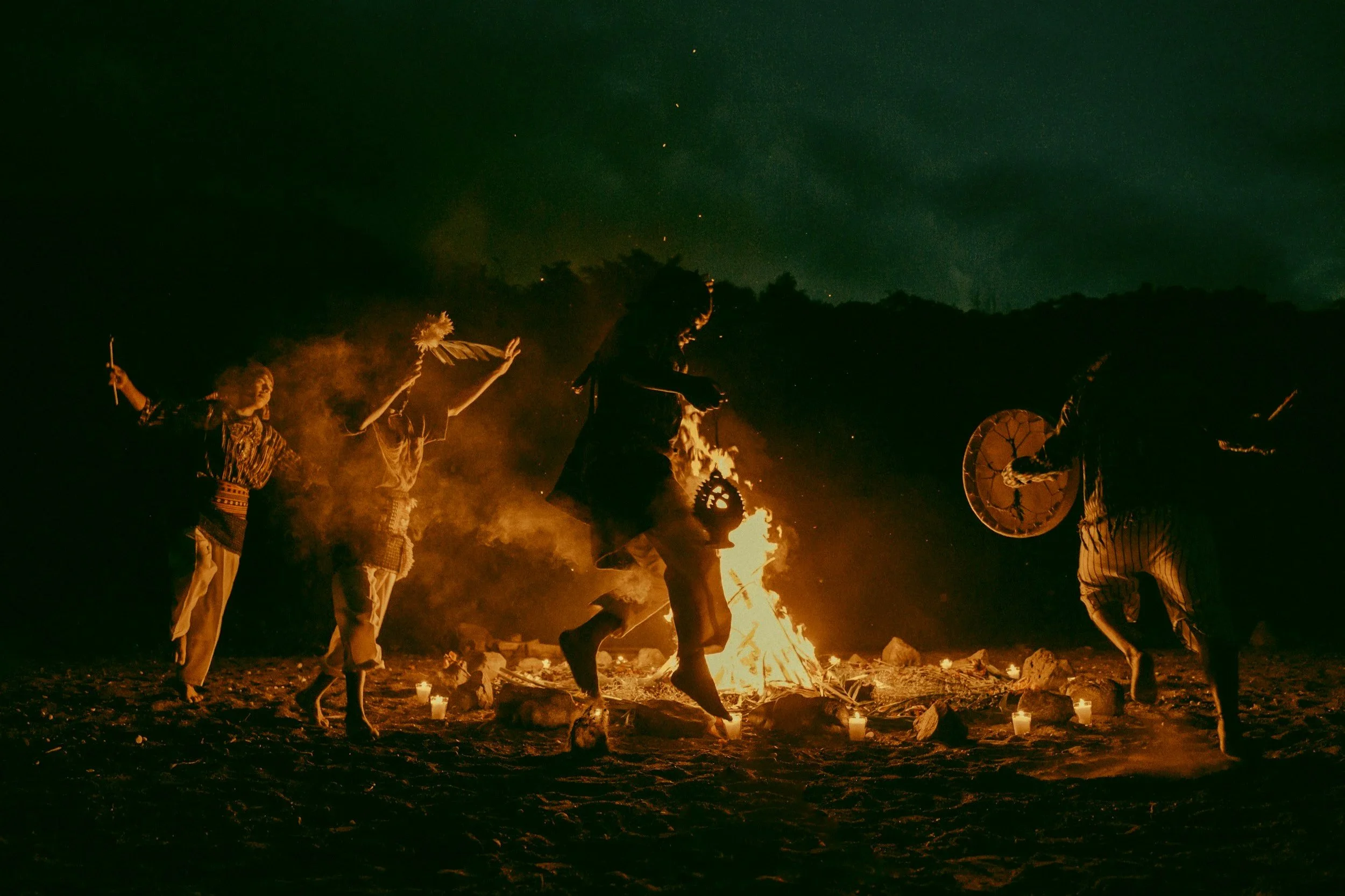
What the Quiet Fire Does to You
"Inflammaging" isn't our term. Immunologist Claudio Franceschi coined it in 2000 to describe exactly what longevity research today treats as a central aging mechanism: chronic low-grade inflammation doesn't just accompany aging — it's one of the things that drives it.
What makes this tangible is that it isn't only something happening far off in the future. It shows up in numbers you're probably already tracking:
HRV (heart rate variability). The number your watch or ring shows you each morning is connected to your body's inflammation level: people with lower HRV tend to have higher CRP and IL-6 on average, across studies spanning hundreds to thousands of participants. The relationship is moderate, not dramatic, and one bad night tells you nothing about chronic inflammation. But an HRV that sits low month after month is one of the few everyday numbers that actually reflects the quiet fire.
Sleep. The relationship runs both ways. Sustained poor sleep raises CRP and IL-6, according to a pooled analysis of 72 studies and more than 50,000 people, and elevated inflammation in turn makes it harder to fall into and stay in deep sleep. The interesting null result from that same analysis: short-term, experimentally induced sleep loss didn't raise the markers. One miserable night isn't the problem. Months of them are.
Skin. The same low-grade inflammation driving aging on the inside contributes to the visible signs on the outside — wrinkles, loss of elasticity, uneven pigmentation. It's the most visible link between inflammaging and something you can actually see in the mirror.
Biological age. Epigenetic clocks measure how "old" your body actually is, independent of your birth year, and several of the newer ones (like GrimAge) factor in methylation patterns tied to inflammatory proteins such as CRP. Two 40-year-olds born on the same day can have very different biological ages, and their inflammation levels are part of the explanation.
Cardiovascular disease, where clinical trials suggest the relationship is actually causal, not just coincidental — and an increased risk of type 2 diabetes, depression, and dementia, where inflammation is a risk factor, meaning statistically linked rather than proven causal.
And then the thing that actually moves the numbers: exercise. A single hard workout raises inflammation temporarily. That's the point — it's the adaptation itself, an acute fire that shows up and then goes back out. Regular exercise sustained for more than twelve weeks does the opposite: it lowers resting CRP, IL-6, and TNF-α, according to a pooled analysis of 38 trials with 2,557 healthy adults, and the effect holds even without weight loss. The most surprising finding in that same analysis: the effect on CRP was strongest at moderate intensity and got weaker the harder people trained. You don't put out the quiet fire by hammering it. You put it out by showing up again.
One honest footnote to all of this: something correlating with your HRV, your sleep, or an epigenetic clock is not the same as something that moves that number actually extending your life. We'll come back to that.
What We Know About Nettle Leaf and Rosehip Shells
Two completely ordinary ingredients each touch, in their own way, on that same quiet fire. The evidence here is about joints and pain — not about the numbers in the section above.
Nettle leaf, in lab experiments, inhibits NF-κB — the molecular "on switch" that triggers much of the body's inflammatory response — along with the COX-1 and COX-2 enzymes. The clinical test of this is a small, open-label 1997 study of 37 patients with acute arthritis: half-dose diclofenac (a common anti-inflammatory medication) combined with stewed nettle leaf lowered the inflammatory marker protein CRP just as effectively as a full dose of diclofenac alone.
Rosehip shells contain the galactolipid GOPO, which in several studies reduces the migration of immune cells (neutrophils and monocytes) toward inflamed tissue and lowers CRP after four weeks of intake. A pooled analysis of three studies covering 287 osteoarthritis patients shows a modest but real pain-reducing effect.
What We Don't Know
And here are the caveats — which we always share before we draw a conclusion, because that's how we operate.
The 1997 nettle study had no placebo group, and the nettle was given alongside a pain medication. That makes it impossible to know how much of the effect actually came from the plant.
The rosehip literature has its own important detail: the best evidence applies to powder made from both seeds and shells together, not shells alone — and that's specifically what we use. A smaller study of rheumatoid arthritis patients given the full powder (seeds and shells) for four weeks found no change at all in CRP or pain. And all three positive studies in the meta-analysis were funded by the same manufacturer (Hyben-Vital International) — which we always mention when it's true.
And the most important caveat — the one we promised to come back to: none of this has been tested against the numbers in the overview above. No one has studied whether nettle leaf or rosehip shells move HRV, sleep, skin, biological age, or dementia risk. Building that bridge ourselves would mean implying an effect nobody has actually shown, on exactly the topics people care about most.
Evidence grade, summary:
Nettle leaf and CRP/arthritis: C (promising mechanism, one small, uncontrolled clinical trial combined with medication). Rosehip shells and osteoarthritis pain: B/C (moderate effect in a pooled analysis of industry-funded studies; no effect in a smaller rheumatoid arthritis trial; shells alone are less well documented than seeds and shells combined). HRV, sleep, skin, biological age, and disease risk: this is background science on inflammation in general, not on these plants. None of it currently supports a health claim.
Our Choice
We show the overview because it turns "low-grade inflammation" into something people can relate to, instead of a technical term. That's the same reason the Journal exists: to make the biology understandable, without turning it into a promise.
The joint story is the one we build on for nettle leaf and rosehip shells, because that's where the actual human evidence sits. The bigger, long-term outcomes in the overview above stay in place as context — not as a conclusion about what our plants do. It's a line we draw on purpose, not because the alternative story wouldn't be good, but because it wouldn't be true.
You can't supplement your way out of a bad lifestyle.
---
Sources (PubMed-verified)
1. Ferrucci L, Fabbri E. Inflammageing: chronic inflammation in ageing, cardiovascular disease, and frailty. Nat Rev Cardiol. 2018;15:505-522. DOI 10.1038/s41569-018-0064-2. (Defines inflammaging and summarizes links to CVD, kidney disease, diabetes, depression, dementia, sarcopenia.)
2. Franceschi C, et al. Inflamm-aging: an evolutionary perspective on immunosenescence. Ann N Y Acad Sci. 2000;908:244-54. PMID 10911963. (Original definition of the term.)
3. HRV and inflammation: Thayer JF, Yamamoto SS, Brosschot JF. The relationship between heart rate variability and inflammatory markers in cardiovascular diseases. Int J Cardiol. 2010. PMID 18819754. See also Heart Rate Variability and Circulating Inflammatory Markers in Midlife. PMID 34268499 (N=836).
4. Sleep and inflammation: Irwin MR, Olmstead R, Carroll JE. Sleep Disturbance, Sleep Duration, and Inflammation: A Systematic Review and Meta-Analysis. Biol Psychiatry. 2016;80(1):40-52. PMID 26140821. (72 studies, more than 50,000 participants.)
5. Skin and inflammaging: Krutmann J, Bouloc A, Sore G, Bernard BA, Passeron T. The skin aging exposome. J Dermatol Sci. 2017;85(3):152-161. PMID 27720464.
6. Exercise and CRP: Fedewa MV, Hathaway ED, Ward-Ritacco CL. Effect of exercise training on C-reactive protein: a systematic review and meta-analysis. Br J Sports Med. 2017;51(8):670-676. PMID 27445361 (effect holds even without weight loss). Long-term exercise training and inflammatory biomarkers in healthy subjects: a meta-analysis of RCTs. 2023. PMC10499556 (38 trials, 2,557 healthy adults; moderate intensity and >12 weeks strongest; PMID not looked up this round).
7. Epigenetic clocks as an aging measure, general background: PMC4588858 (not independently re-verified this round).
8. Chrubasik S, Enderlein W, Bauer R, Grabner W. Evidence for antirheumatic effectiveness of Herba Urticae dioicae in acute arthritis: a pilot study. Phytomedicine. 1997;4(2):105-8. PMID 23195396.
9. Christensen R, Bartels EM, Altman RD, Astrup A, Bliddal H. Does the hip powder of Rosa canina (rosehip) reduce pain in osteoarthritis patients? A meta-analysis of RCTs. Osteoarthritis Cartilage. 2008;16(9):965-72. PMID 18407528.
10. Not independently PMID-verified this round, cited only via a secondary review (Dovepress, 2016): a smaller rheumatoid arthritis study using rosehip powder (seed + shell), 4 weeks, no findings. Needs direct verification before further use.
None of the ingredients in this article appear on the Danish Veterinary and Food Administration's (Fødevarestyrelsen) risk list.
Internal pre-publication checklist (not for public copy): Journal test, Fact-Checker, Legal & IP.